
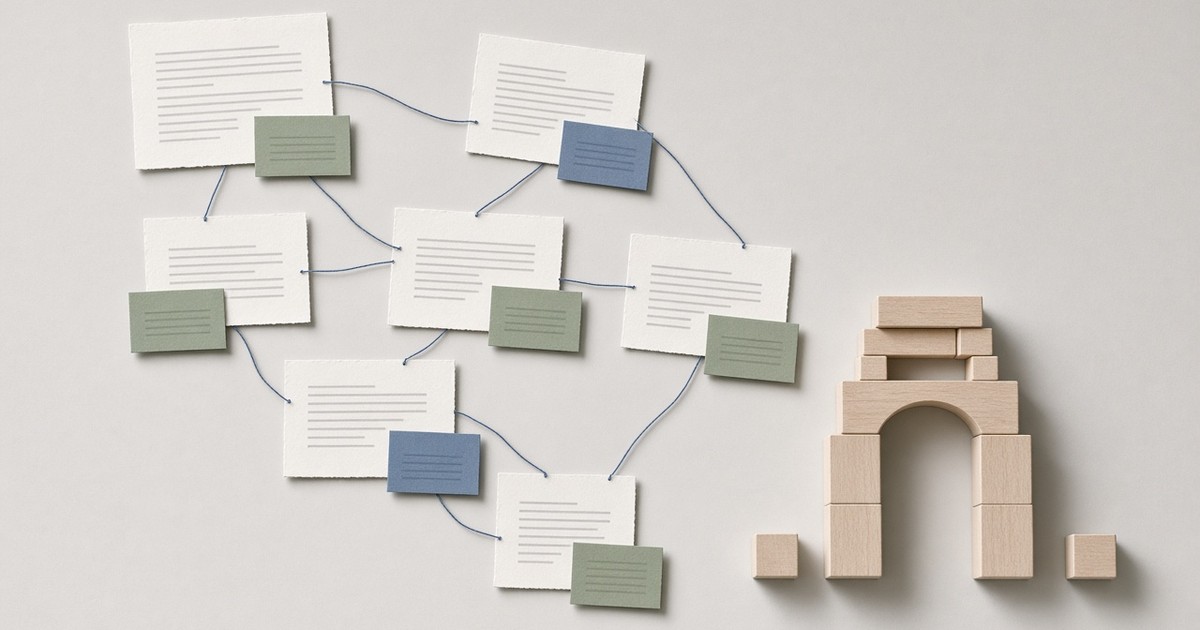
Some manuscripts have clean sentences and still do not work. Readers enjoy the first fifty pages, then put the book down and never pick it up again. The climax arrives and feels unearned. The subplot everyone liked disappears without explanation. None of these problems lives in the sentences, and no amount of polishing will fix them.
Developmental editing addresses that level of the book. This guide explains what a developmental editor examines, how to tell whether a manuscript needs one, what the deliverable looks like, and how to choose and work with an editor. For the full sequence of editing roles, see Book Editing Stages Explained: Who Does What, and in What Order.
The questions a structural edit asks
Developmental editing goes by several names, including structural editing and substantive editing. Whatever the label, the editor reads the whole manuscript and asks whether the story holds together as a piece of design.
The questions usually fall into a few groups.
Shape and structure. Does the book open in the right place? Do the major turning points arrive when they should? Does the middle build, or does it only fill time before the ending?
Cause and effect. Does each event follow from the one before it? Are there plot holes, coincidences carrying too much weight, or setups that never pay off? Planted clues, decoy suspects, and countdown deadlines all live here, because they depend on where information appears in the story.
Character. Does the protagonist want something, act to get it, and change (or refuse to change) in a way that matters? Does each secondary character have a job in the story?
Pacing and tension. Where does momentum drop? Which scenes repeat what the reader already knows? Is it clear what the protagonist stands to lose, and does the risk grow?
Point of view. Is the story told through the right character, at the right distance? Do unplanned shifts between characters’ heads pull the reader out?
Genre fit. Does the book give readers of its genre what they came for?
Signs a manuscript needs a developmental edit
The best time to book a developmental edit is after at least one full self-revision and before any money goes to line editing or copyediting. Paying to perfect chapters that later get cut is one of the most common ways editing budgets disappear.
A developmental edit is often worth considering when:
- The book is a first novel, or a first attempt at a new genre.
- Beta readers agree something is wrong but disagree about what.
- Several rounds of revision have not made the book better.
- The book opens a planned series and the foundation needs to be solid before the next installment.
It is usually not the right purchase when readers are happy with the story and their complaints are about clunky sentences or typos. Those point to a line edit or a copy edit instead. See Line Editing: Sentence-Level Polish for a Finished Story and Copyediting a Book: Correctness, Consistency, and the Style Sheet.
Inside the editorial letter
A developmental edit usually comes back in two parts.
The first is the editorial letter. It summarizes what the manuscript does well, names the largest problems, and suggests approaches, typically ranked by priority. Its length depends on the editor and the book, and it can run from several pages to many more.
The second part is the annotated manuscript. Margin comments point to the scenes and passages where each problem shows up, so the author can see the issue in context.
Some editors add extras, such as a follow-up call to discuss the notes, a chapter-by-chapter outline of what they observed, or a review of the author’s revision plan. These vary, so confirm what is included before signing.
Illustration (invented example): A letter for a space-station mystery might read, “The murder that drives the plot happens in chapter 6, but the first five chapters are spent on station politics that never connect to the crime. Consider opening closer to the body and threading the political tension into the investigation.” The note names the problem, explains why it matters, and offers a direction. The writing itself stays with the author.
Full edit or manuscript assessment?
A full developmental edit includes both the letter and detailed margin notes. A manuscript assessment, sometimes called a critique or evaluation, delivers a big-picture report without the line-by-line annotations. An assessment generally costs less than a full developmental edit.
An assessment can be a sensible middle step when the budget is tight, or when the author wants a diagnosis before committing to a larger revision. Prices for both services vary widely. Professional associations for freelance editors publish rate surveys, which are a reasonable reference before requesting quotes.
Where the job stops
Disappointment with a developmental edit often comes from expecting a different service. A developmental editor typically does not:
- Correct grammar or typos. An editor may point out a pattern, such as heavy use of fragments in action scenes, but systematic correction belongs to copyediting.
- Polish the prose. Sentence-level improvement is line editing.
- Rewrite the book. The editor diagnoses and suggests. The author rewrites. An offer to rewrite chapters describes ghostwriting or co-writing, which should be priced and credited as such.
- Guarantee results. No editor can promise an agent, a publishing deal, or sales.
Getting a manuscript ready
Preparation affects how much value the edit delivers.
- Send a complete draft. Some editors accept partial manuscripts, but a finished story lets them judge the whole shape.
- Fix the known problems first. Paying someone to report problems the author already knows about is wasted money.
- Follow the editor’s file requirements. That usually means a Word document in a readable font, double-spaced, with clear chapter breaks.
- Include a one- or two-page synopsis of the intended story. The gap between intention and execution is often where the most useful notes come from.
- List specific questions. “Does the rival-chef subplot earn its page count?” gets a better answer than “Is it good?”
- State the genre, target audience, and a few comparable titles, since a cozy mystery and a grim military fantasy follow different conventions.
- Block out time for the rewrite. The notes only matter if they lead to revision.
Vetting a developmental editor
What to look for
- Experience in the genre. An editor who mainly works on memoir may not suit a space opera.
- A sample critique. Many developmental editors offer a sample on a chapter, or a short call. Some charge for it. Judge how clearly they explain problems. Vague praise and vague criticism are equally useless.
- References or testimonials from authors whose work can be checked.
- A written agreement covering scope, deliverables, deadline, price, payment schedule, and cancellation terms.
- Respect for the author’s intent. The goal is the book the author is trying to write, not the one the editor would have written.
Warning signs
- Promises of an agent, a deal, or bestseller status.
- No contract, or a scope that stays vague after questions.
- Plans to rewrite large sections when that is not the agreed service.
- Feedback that is all praise or all teardown, with no specifics.
- No sample and no verifiable past clients.
- Pressure tactics, such as a price that supposedly rises tomorrow.
- A single low price for developmental, line, and copy editing in one pass. Those are separate jobs.
After the notes arrive
Read the whole letter before reacting to any single point. Then test each major note against three questions. Is the note clear? Once it is pointed out, is the problem visible? Does a way to fix it come to mind? A note that passes all three is worth acting on. When an editor’s sample notes pass that test, the editor is likely a good fit.
Work from the editor’s priority order, biggest structural issues first, since fixing those often resolves smaller ones. Hold off on line editing and copyediting until the rewrite is done.
Developmental editing FAQ
What does developmental editing cover?
It covers the big-picture elements of a manuscript, including structure, plot, character, pacing, and point of view. The editor delivers an editorial letter and margin comments that explain what works, what does not, and possible fixes.
How is a manuscript assessment different from a developmental edit?
An assessment is usually a big-picture report on its own. A developmental edit adds detailed notes inside the manuscript. The assessment is often the less expensive of the two.
At what point should a developmental editor be hired?
After the draft is finished and self-revised, and before line editing or copyediting. Settling the structure first avoids paying to polish scenes that will be cut.
Will a developmental editor correct grammar?
No. Grammar, spelling, and consistency belong to the copy editor, who works later in the process.